Evidence from your trading.Disclosure on your terms.
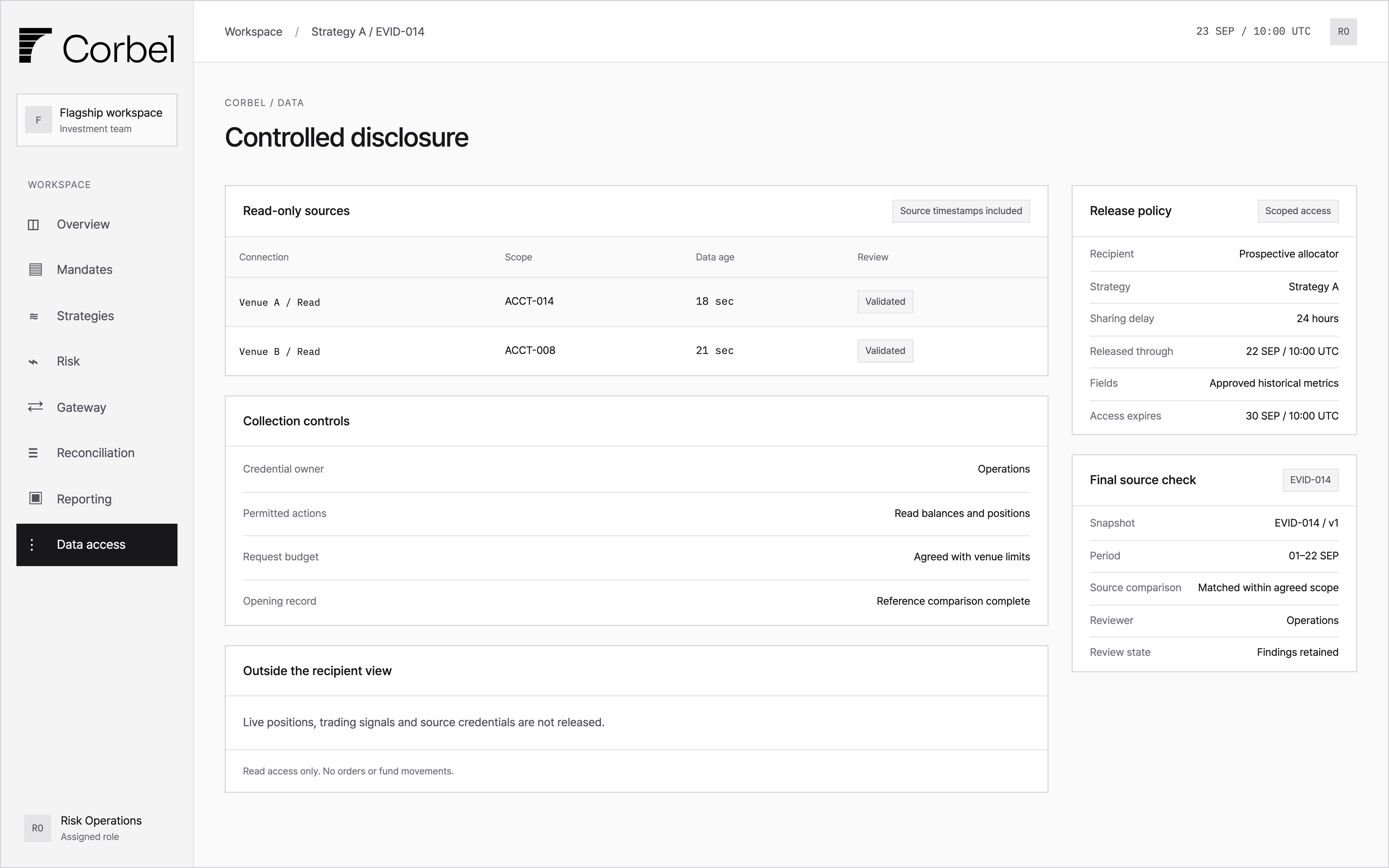
Share approved strategy records without exposing the live portfolio. Corbel checks read-only connections, controls when and to whom records are released, and compares the agreed snapshot with source data.
Agreed snapshot. Defined period. Recorded findings.
01
Read access within agreed source limits
02
Selected records, released on your terms
03
A source check with a defined scope
Product view
From a checked connection to a shared record.
Follow Strategy A from read-only sources through its release policy to a source-checked historical snapshot.
Source connection
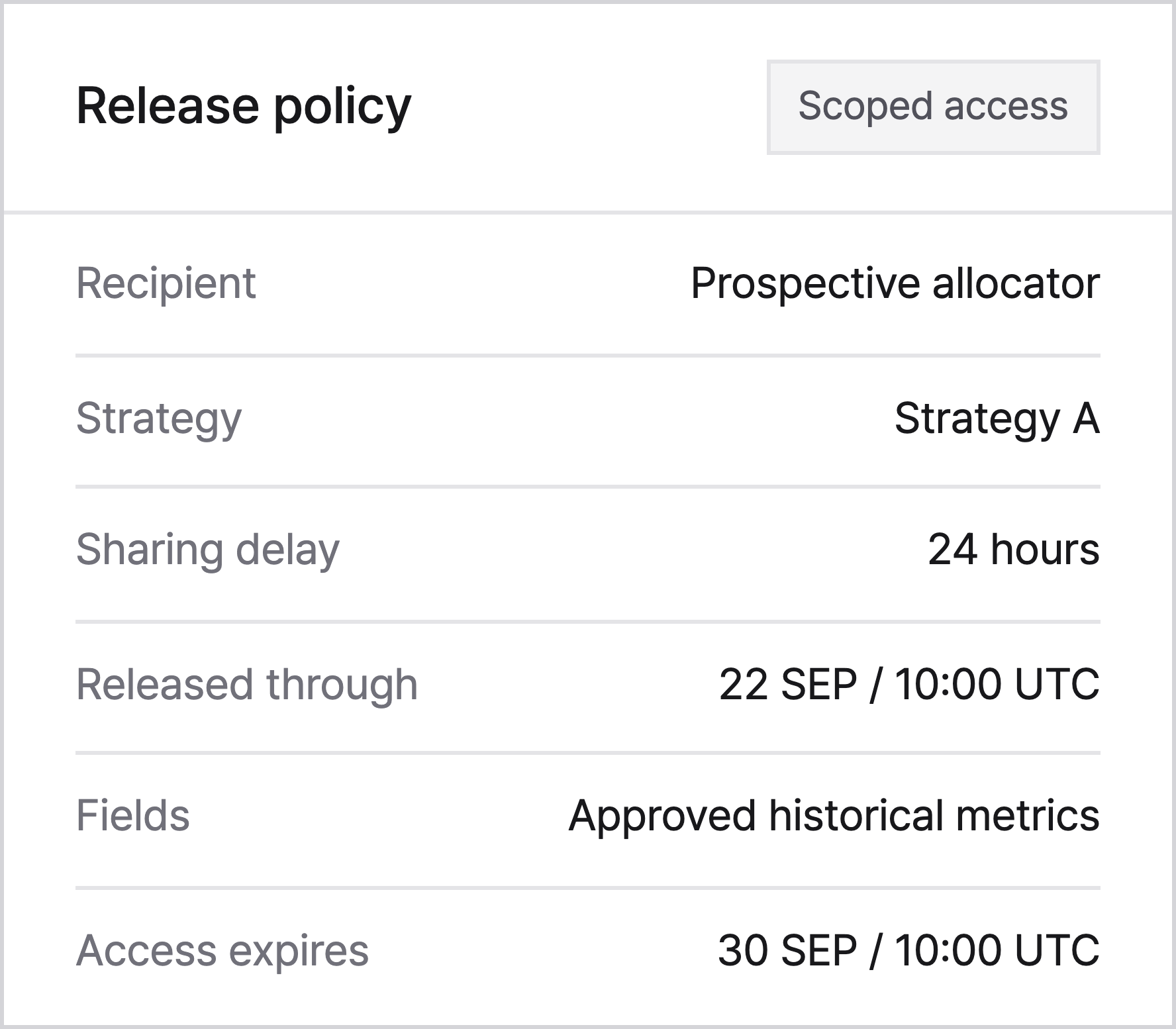
Release policy
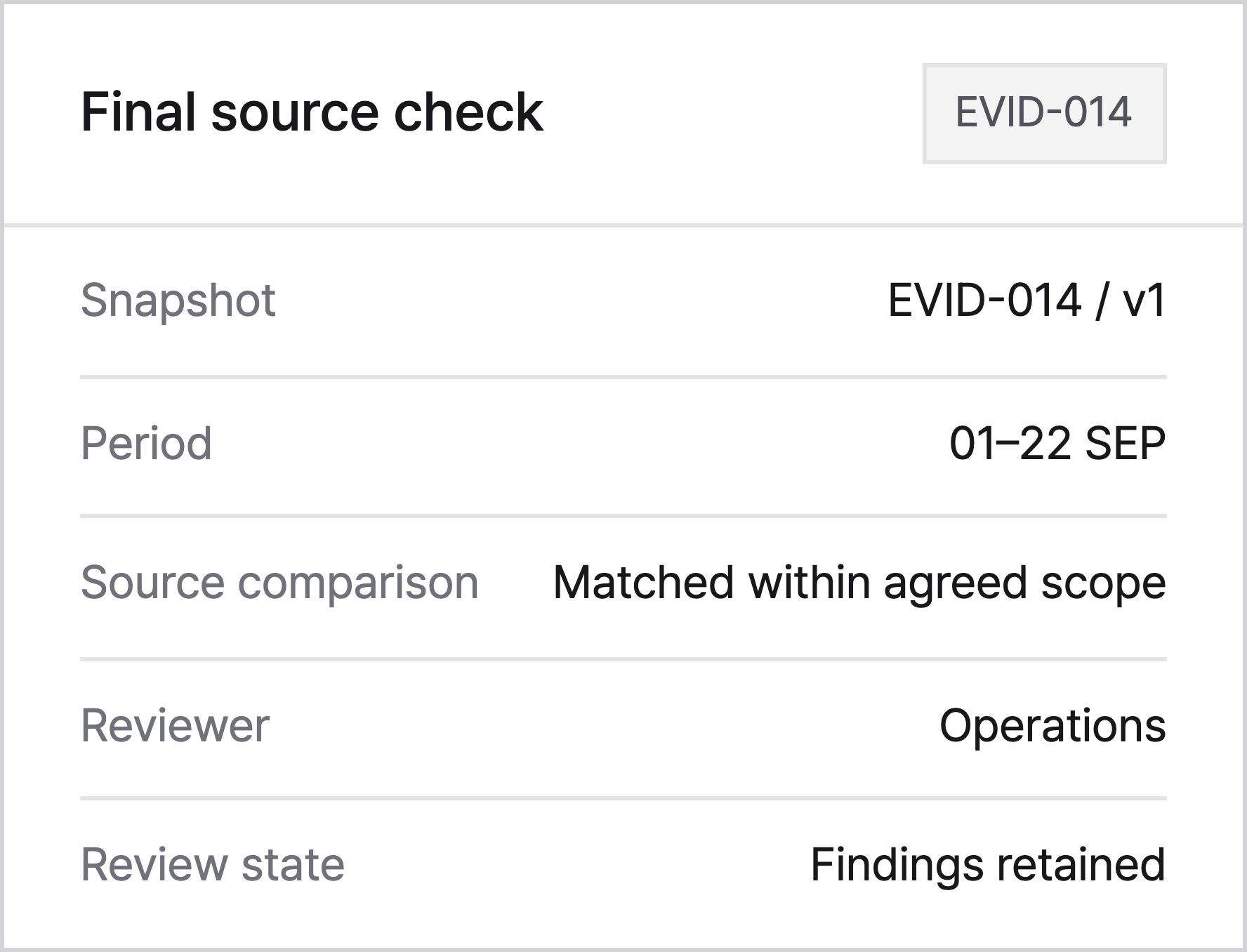
Snapshot verification
What it covers
Control the path from source to shared evidence.
Keep data collection separate from recipient access. Agree what can be read, when it can be shared and what the final source check covers.
Check the source connection
Check existing read-only access, timestamps and opening records against the agreed scope. Keep collection within the source request budget, with clear credential and incident ownership.
Account scope, completeness and reference records
Collection limits and a separate distribution store
Credential owner, rotation and revocation
Set the disclosure boundary
Release only approved accounts, fields and periods after the configured delay. Give each recipient separate viewing and export rights without sharing source credentials.
Approved fields, aggregation and release delay
Recipient permissions, expiry and access history
Live positions and trading signals remain private
Verify the agreed snapshot
At the final review, compare the selected historical snapshot with available source records. Record matched items, gaps and definitions with the reviewer and verification time.
Defined accounts, period and snapshot version
Source coverage, calculation basis and tolerances
Recorded findings and unresolved differences
In practice
Your strategy. Evidence for the next client.
Consider a quant manager presenting its own market-neutral strategy to a prospective allocator. The prospect reviews approved historical records while the manager keeps trading through its existing systems.
01
Prepare
Check read access and select the accounts and historical period.
02
Release
Publish approved records after the agreed delay.
03
Review
The recipient reviews the permitted evidence and raises questions.
04
Verify
Compare the agreed snapshot with source records and retain the findings.
Implementation
Plan your implementation.
Define the inputs, responsibilities and checks for your operation.
Your inputs
Existing read connections, account scope, reference records, recipients and the intended disclosure delay.